


Introduction
Vending machines have become an increasingly common feature across workplaces and commercial spaces in Singapore. Market research has shown that advances in Singapore’s cashless payment technology, IoT connectivity, and remote machine management have made vending machines easier to operate, while their compact footprint makes them well-suited to Singapore’s space-conscious environment.
Today, businesses can rent a vending machine in Singapore for a wide range of purposes, from selling their own products to providing convenient food and beverage options for employees, customers, and visitors. This guide explains how the process works, the different rental models available, typical costs, and the key factors to consider before choosing a solution for your business.
What is a Vending Machine?
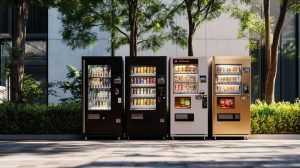
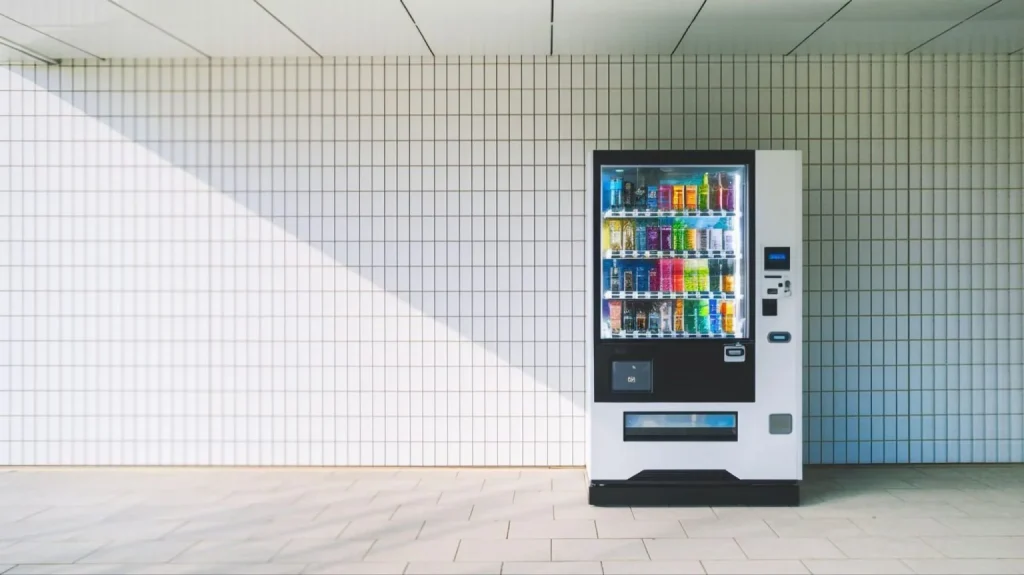
A vending machine is a self-contained, automated retail unit that dispenses products in exchange for payment, with no staff required at the point of sale. Customers simply select an item, pay using cash, card, or e-wallet, and the machine dispenses the product.
Many modern vending machines are IoT-enabled, cashless-ready, and remotely monitored, making them a convenient solution for both operators and users.
For businesses, vending machines generally serve one of two purposes:
- Amenity provision: Businesses install a vending machine to provide convenient food, drinks, or other products for employees, customers, or guests. In most cases, the vending machine supplier manages installation, stocking, maintenance, and servicing, allowing the business to offer the amenity without handling day-to-day operations.
- Revenue generation: Businesses operate the vending machine themselves by stocking their own or third-party products, setting prices, and collecting the sales revenue. This model offers greater control but also requires ongoing inventory management and machine maintenance.
Renting vs Leasing vs Buying a Vending Machine in Singapore
These three terms are often used loosely, but they refer to meaningfully different arrangements:
- Renting is a short-to-medium-term agreement where you pay a monthly fee to use the machine. The supplier retains ownership and is typically responsible for maintenance and repairs. Rental contracts tend to be more flexible, with shorter minimum terms.
- Leasing is a longer-term commitment, usually 12 to 36 months. Like renting, the supplier owns the machine, but the contract is harder to exit early. Leasing often comes with lower monthly costs than renting in exchange for that commitment.
- Buying means you own the machine outright. You bear the full upfront cost and take on responsibility for maintenance, repairs, and eventual replacement.
Quick Comparison between Renting, Leasing & Buying a Vending Machine
| Renting | Leasing | Buying | |
| Average cost | SGD 200–700/month | SGD 150–500/month | SGD 4,000–20,000 upfront |
| Minimum term | Flexible (some event rentals daily) | 12–36 months typically | N/A (one-off) |
| Maintenance | Usually, the supplier’s responsibility | Shared or supplier’s responsibility | Owner’s responsibility |
| Best for | Testing locations, short-term needs, and managed office solutions | Established operators wanting lower ongoing costs | Operators with capital and long-term plans |
| Pros | Low commitment, easy to swap machines | Lower monthly outlay than renting | No recurring rental fees, full control |
| Cons | Higher monthly cost over time | Early exit penalties | Higher upfront cost, maintenance, restocking, and operating costs |
Benefits of Vending Machines for Businesses
- 24/7 availability: Provide food, beverages, or products at any time, including after business hours.
- Improved convenience: Give employees, customers, or visitors quick access to refreshments or essential items without leaving the premises.
- Space-efficient: Requires significantly less space than a café, pantry, or retail store.
- Cashless payment options: Most machines support cards, mobile wallets, and QR code payments for faster transactions.
- Wide product variety: Dispense everything from snacks and coffee to fresh meals, personal care items, and specialty products.
- Scalable: Easily add or relocate machines as your business grows or operational needs change.
- Low staffing requirements: Operates without dedicated on-site staff, helping reduce day-to-day operational demands.
- Smart technology: Many modern vending machines include IoT monitoring, allowing stock levels, sales, and machine performance to be tracked remotely.
Which Business Model Fits Your Business Purpose?
As this guide focuses on vending machine rental, the sections that follow will explore rental models and considerations in greater detail.
Before choosing a vending machine rental model, consider what you want to achieve. Most businesses rent vending machines either to provide a convenient amenity for employees, customers, or visitors or to sell products as a source of revenue.
1. Providing an Amenity
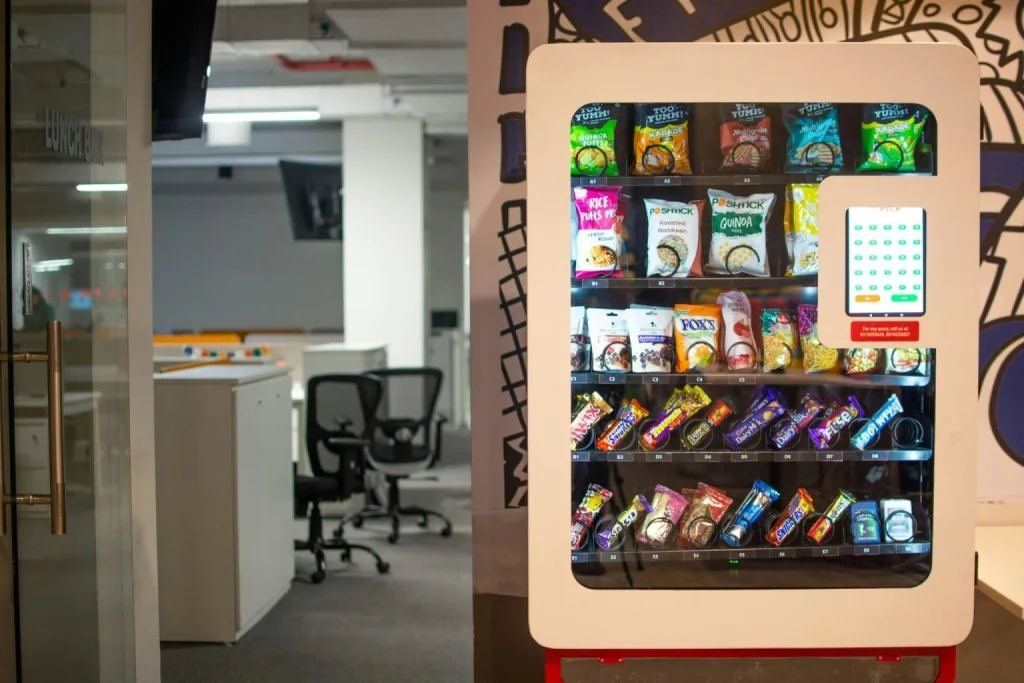
For offices, hotels, hospitals, schools, and other commercial spaces, vending machines are often an operational decision rather than a source of direct revenue. A fully managed vending solution is usually the best fit, as the supplier provides the machine and manages restocking, maintenance, and servicing, while the business simply provides the space.
Best rental model: Fully Managed Vending Solution
- Purpose: Improve convenience for employees, customers, guests, or visitors.
- Revenue: Usually none, although some suppliers offer revenue sharing.
- Restocking: Managed by the supplier.
- Maintenance: Managed by the supplier.
- Best for: Offices, hotels, hospitals, schools, and other commercial spaces.
- Why businesses choose it: Convenient on-site refreshments, minimal operational involvement, and a scalable solution for workplaces of all sizes.
2. To Sell Their Own Products
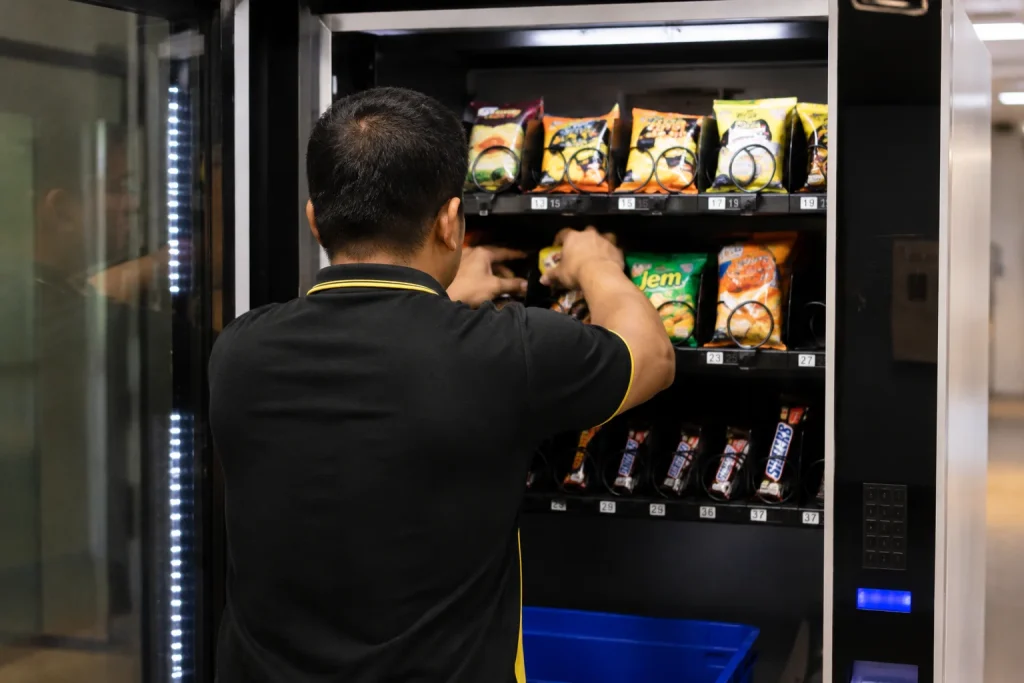
Businesses that want to sell their own products often rent a vending machine to avoid the high upfront cost of purchasing one. A self-operated rental provides greater flexibility while allowing businesses to test locations, expand gradually, and upgrade equipment as needed.
Best rental model: Self-Operated Rental
- Purpose: Generate revenue through product sales.
- Revenue: Yours to keep.
- Restocking: Your responsibility.
- Maintenance: Usually handled by the supplier, subject to the rental agreement.
- Best for: Retailers, entrepreneurs, niche brands, and businesses operating vending machines as a sales channel.
- Why businesses choose it: Lower upfront investment, easier location testing, flexible expansion, and simpler equipment upgrades.
What Kinds of Vending Machines Can You Rent in Singapore?
Here’s a brief breakdown of the most common vending machine types available for rent in Singapore. For a full breakdown, visit our article on What Are the Different Types of Vending Machines in Singapore?
1. Food and Beverage Vending Machines
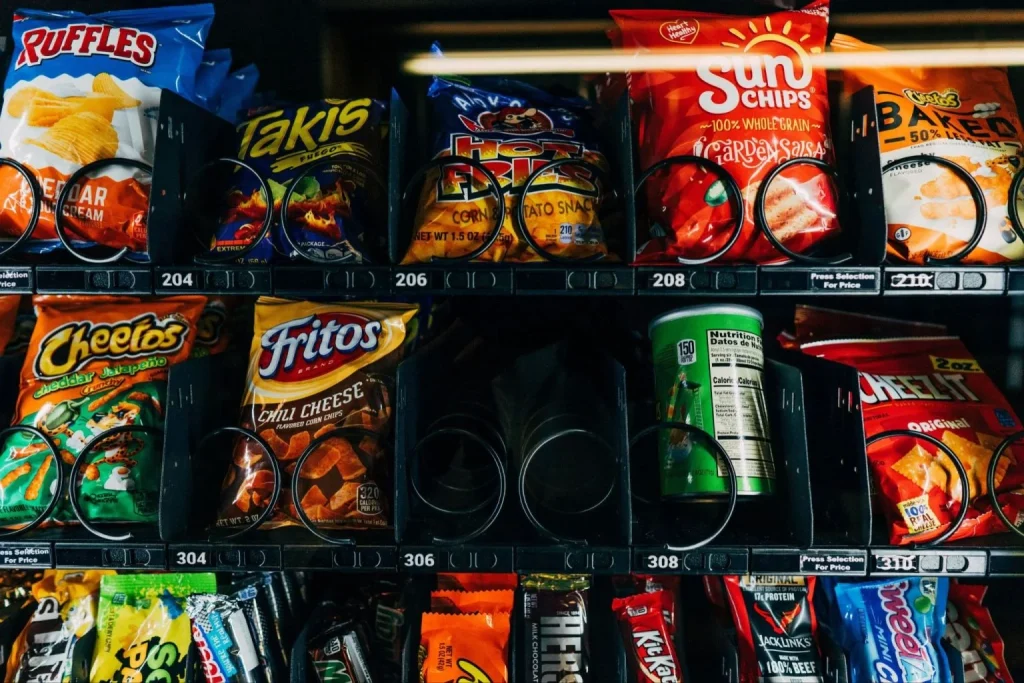
The most common category, which covers everything from packaged snacks and chilled drinks to hot meals and frozen food. Rental costs for standard snack machines start from around SGD 200 to SGD 400 per month, while refrigerated combo units typically range from SGD 300 to SGD 500 per month.
As a food vending machine supplier in Singapore, CoffeeBot offers this solution through TastyBot, a fully managed food and beverage vending machine designed to provide convenient access to snacks and drinks in workplaces, commercial spaces, and public venues.
2. Coffee Vending Machines
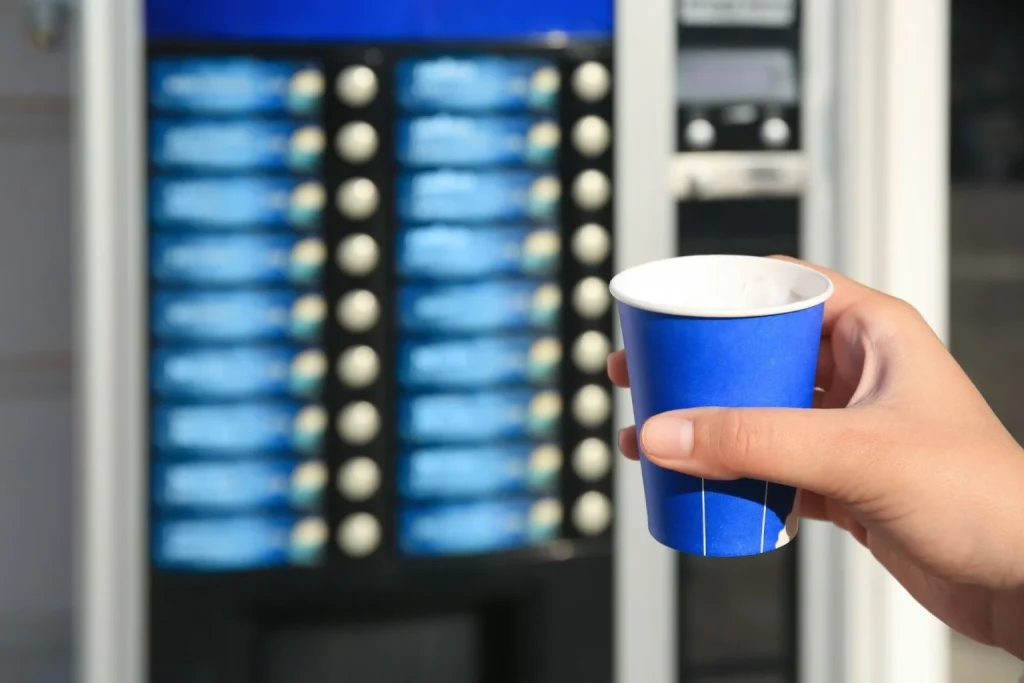
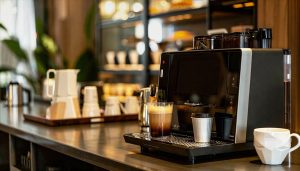
Coffee machines are among the most popular vending machine types for offices, hotels, hospitals, and other commercial spaces. They range from basic instant coffee machines to fully automatic bean-to-cup models that grind fresh coffee for every cup, allowing businesses to choose a solution that matches their budget and user expectations.
3. Specialty Vending Machines
Covers everything outside the standard food, drink, and coffee categories: books, electronics accessories, flowers, automotive care products, health supplements, and more. These often use locker-style compartments rather than coil mechanisms, and are built or customised for the specific product type.
How to Rent a Vending Machine in Singapore
The rental process varies depending on whether you want a fully managed vending solution or a self-operated rental. Here’s what to expect for each:
| Step | Fully Managed Rental | Self-Operated Rental |
| 1. Define your objective | Decide what refreshments or products you want to offer employees, customers, or visitors. | Decide what products you want to sell and identify your target customers. |
| 2. Register your business | Not typically required if you’re simply hosting a supplier-managed vending machine. | Make sure your business is registered with the Accounting and Corporate Regulatory Authority (ACRA) if you’re operating the vending machine as a business. |
| 3. Choose a machine | The supplier recommends a suitable coffee, snack, beverage, or food vending machine based on your location and expected demand. | Select a machine that suits the products you intend to sell and your operational requirements. |
| 4. Secure a location | Provide a suitable space with access to power and any required utilities. | Obtain approval from the property owner or landlord and ensure the location has sufficient foot traffic and utilities. |
| 5. Finalise the agreement | Review the rental agreement, including servicing, maintenance, restocking, and contract terms. | Review the rental agreement, including maintenance responsibilities, contract duration, and servicing arrangements. |
| 6. Installation and setup | The supplier installs, stocks, and commissions the machine before it goes live. | The supplier installs the machine, after which you stock it, set prices, and prepare it for operation. |
| 7. Ongoing operations | The supplier manages restocking, servicing, maintenance, and repairs. | You manage inventory, pricing, and restocking, while the supplier typically handles mechanical servicing according to the contract. |
Factors to Consider Before Renting a Vending Machine in Singapore
Whether you choose a fully managed or self-operated rental, there are several factors to evaluate before signing a rental agreement:
| Factor | Fully Managed Rental | Self-Operated Rental |
| Budget | Monthly rental fees are generally fixed and may include servicing, maintenance, and restocking. | Consider rental fees alongside inventory purchases, utilities, insurance, and operating expenses. |
| Maintenance | Usually handled entirely by the supplier. | Confirm which maintenance responsibilities belong to you and which are covered by the supplier. |
| Restocking | Managed by the supplier. | You are responsible for sourcing products, inventory management, and restocking schedules. |
| Location | Ensure there is adequate space, power, and demand for the machine. | Choose a location with strong foot traffic and customer demand to maximise sales. |
| Revenue | Revenue sharing may be available depending on the supplier and agreement. | All sales revenue is yours, but profitability depends on pricing, margins, and sales volume. |
| Compliance | Confirm whether the supplier manages any required licensing or regulatory compliance. | Check whether your vending machine requires licensing from the Singapore Food Agency (SFA). |
Location can have a significant impact on vending machine performance. For more tips on choosing the right site, read our guide on good vending machine locations.
Conclusion
So, can you rent a vending machine in Singapore? Absolutely. Whether you’re looking to provide quality coffee for your workplace or convenient refreshments for customers and visitors, renting a vending machine is a flexible, low-commitment way to get started. By choosing the right machine, rental model, and supplier, you can get the most value from your vending machine.
Ready to skip the guesswork? CoffeeBot provides fully managed coffee and vending machine solutions for offices, HoReCa businesses, healthcare facilities, educational institutions, and commercial spaces across Singapore. No maintenance headaches, no restocking runs, just quality coffee and convenience, wherever your people need it. Contact us today and start your free machine trial now!
Frequently Asked Questions
1. Do I need a licence to operate a vending machine in Singapore?
It depends on what your vending machine sells. If it dispenses higher-risk food, such as hot meals, freshly prepared food, raw or minimally processed products, or food prepared inside the machine, you’ll need a Food Vending Machine Licence from the Singapore Food Agency (SFA). The current licence fee is SGD 195 per year.
Machines selling pre-packaged food from SFA-licensed suppliers may not require a separate licence, while machines dispensing non-food items generally do not require one. If you’re unsure, check the SFA’s licensing requirements for your specific machine and products.
2. Who restocks the vending machine?
This depends on your rental model:
- Self-operated rental: You are responsible for purchasing products, managing inventory, and restocking the machine.
- Fully managed rental: The supplier handles restocking, servicing, and maintenance as part of the rental package.
Always confirm each party’s responsibilities before signing the rental agreement.
3. Is renting better than buying a vending machine?
For many businesses, renting is the lower-risk option, especially when starting out. It requires less upfront capital, offers predictable monthly costs, and often includes maintenance and servicing.
Buying gives you full ownership and may be more cost-effective in the long run, but it also requires a higher upfront investment and ongoing responsibility for maintenance, repairs, and replacements. The best option depends on your budget, business goals, and long-term plans.
4. How much does it cost to rent a vending machine in Singapore?
Rental costs vary by machine type and what’s included in the agreement. As a general guide:
- Basic snack machines: SGD 300–450 per month
- Smart machines: SGD 550–750+ per month
- Hot food/specialty machines: SGD 600–900 per month
For fully managed solutions where the supplier also handles restocking and maintenance, the arrangement may be structured differently, sometimes with no rental fee in exchange for revenue from product sales, or a profit-sharing model where the venue receives a percentage of takings. Always clarify exactly what is and isn’t included in the monthly fee before signing.
5. How long does it take to achieve ROI on a vending machine rental?
ROI depends on factors such as location, product mix, pricing, and operating costs. A well-placed machine in a high-traffic location may recover its startup costs within 12 to 18 months, while lower-performing locations can take considerably longer.
Before committing, estimate your expected monthly costs, including rental, inventory, utilities, insurance, and location fees, then compare them against your projected sales to determine your expected break-even period.